
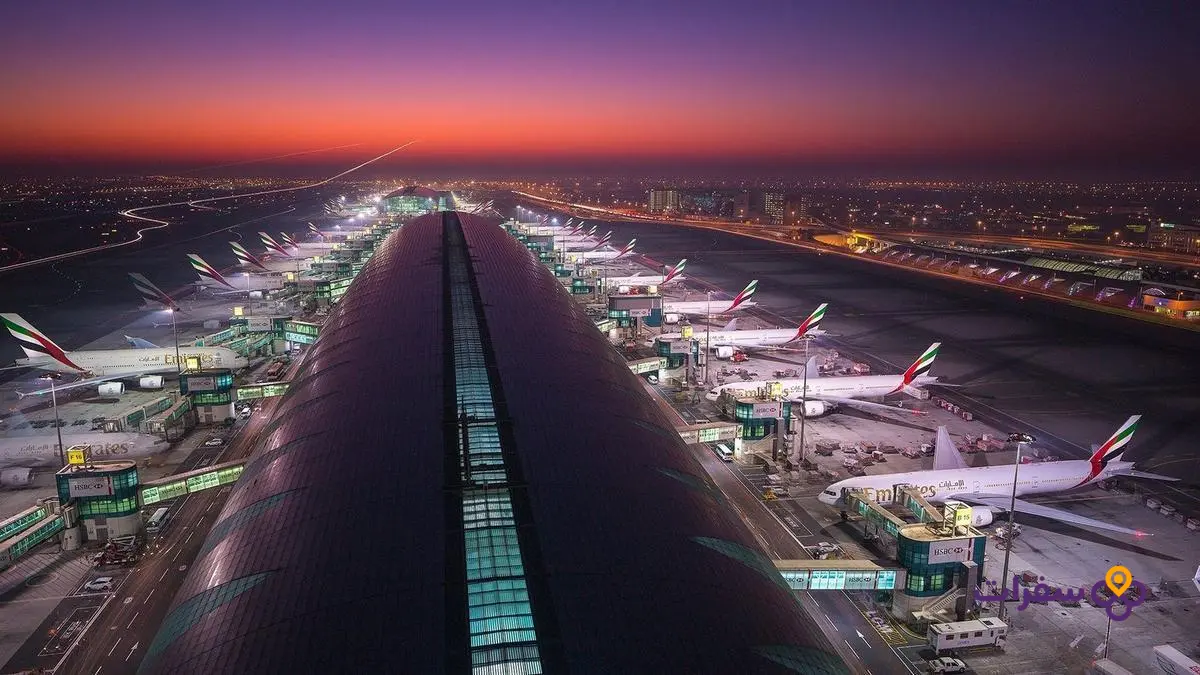
You arrive at Dubai International Airport with a connecting flight in two hours, or you are looking for the fastest way to reach your hotel without delay. This guide covers Dubai International Airport — the traveller’s guide in terms of terminals, procedures, and transport, with the practical details you need before you arrive. Here you will find what helps you move between terminals, understand customs steps, and choose the right means of transport. The information is straightforward and arranged according to the actual sequence of your movement inside the airport.
Overview of the Passenger Terminals at Dubai International Airport
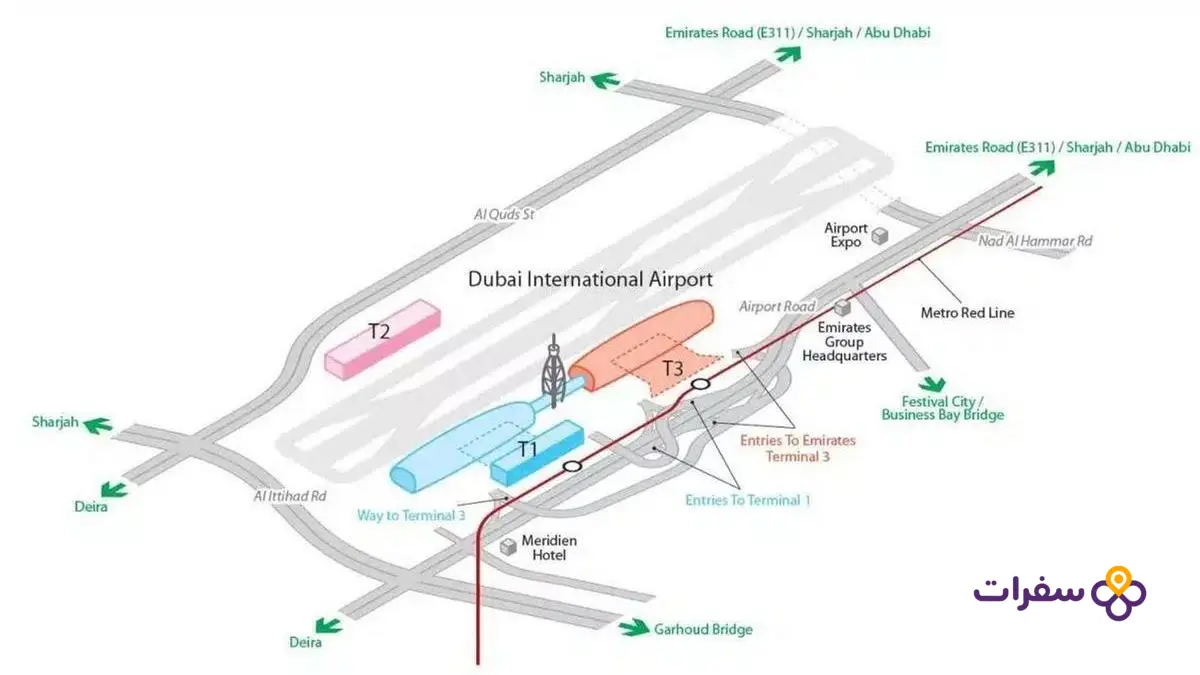
Dubai International Airport has three main passenger terminals, each with a specific function.
- Terminal 1 serves most international airlines worldwide, and includes multiple departure and arrival halls with extensive facilities for travellers from various destinations.
- Terminal 2 is dedicated to budget airlines and regional flights. It is the smallest of the three terminals but provides efficient essential services for short- and medium-haul routes.
- Terminal 3 is the newest and largest terminal, serving primarily Emirates flights and a portion of flydubai flights alongside other airlines, with advanced infrastructure that accommodates heavy passenger traffic around the clock.
Moving Between Terminals
The internal passenger transfer train connects Terminal 1 and Terminal 3 via the various concourse stations, operating continuously at no extra charge. Travellers who need to move to Terminal 2 can use the free shuttle buses available outside the arrival halls, noting that this terminal is not connected to the internal train network. If you are planning aconnecting flight booking through Dubai, check the departure terminal and arrival terminal in advance to estimate the time needed to transfer between them, especially if the transit requires changing terminals.
Identifying the Correct Terminal
Before reaching the airport, check your boarding pass or your airline’s app to find the specific terminal number for your flight. Most signs inside and outside the airport are clear and indicate terminal numbers in both Arabic and English, but congestion during peak hours may make movement slower than expected.
Arrival, Departure, and Customs Procedures
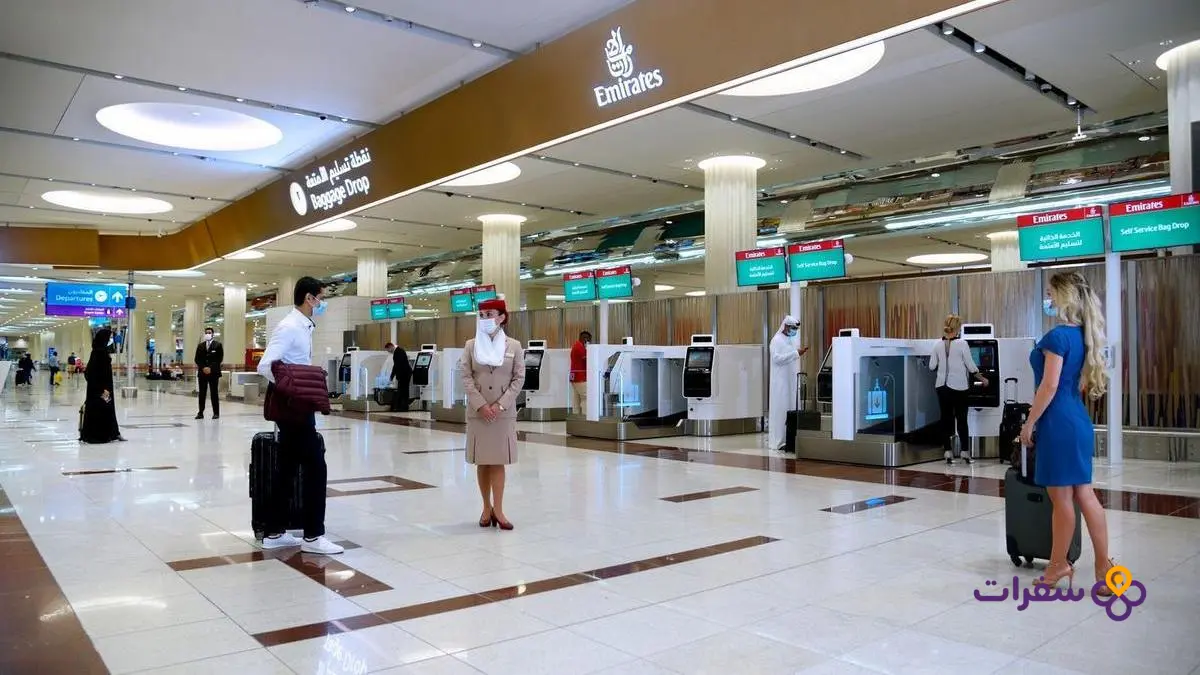
Arrival procedures at Dubai International Airport begin by following the signs leading to the passport hall in the terminal where you landed. Travellers who have previously registered for the Smart Gates programme use the facial recognition or iris scan lanes, while others proceed to the traditional passport-stamping counters. Waiting times are usually longer in the early morning and during evening peak hours, so keep your boarding pass and passport ready.
Baggage and Luggage Collection
After passport stamping, electronic screens display the belt number where your bags will arrive. Oversized or non-standard luggage is delivered in a separate area designated for exceptional sizes, usually indicated by an “Oversized Baggage” sign. If your bag is delayed or lost, go directly to the airline’s baggage service desk before leaving the collection area, as reporting it later complicates the follow-up process.
Customs Declaration and Inspection
You then pass through the customs area, which is divided into two lanes: the green lane for those with nothing to declare, and the red lane for those carrying large sums of cash, commercial goods, or partially restricted items. Inspectors randomly select trolleys for checking even in the green lane, so do not assume passage is automatic. Prohibited items include narcotics, weapons, and certain pork products, while alcohol and tobacco are permitted in limited quantities for personal use only.
Transit and Stopover Guide at Dubai Airport
A transit passenger follows a defined route that begins by following “Transit” or “Connections” signs immediately upon disembarking from the first aircraft. If both flights are on the same airline or within the same alliance, baggage is transferred automatically to the next flight without any action required from the passenger. However, if the tickets are separate or the airlines do not have a cooperation agreement, the bags must be collected from the arrival area and re-checked at the departure desk, with another pass through security screening.
Security Screening Between Flights
Connection procedures between different terminals or concourses require passing through additional security checkpoints, particularly when moving from one terminal to another using the internal train. Keep the boarding pass for your next flight ready, and check the gate closing time shown on the electronic screens throughout the transit corridors. The distance between some gates can take twenty minutes on foot, so check your gate location as soon as you arrive.
Waiting and Rest Facilities
Airport halls provide comfortable seating distributed across waiting areas, with access to restaurants, cafés, and duty-free shops. Travellers holding certain credit cards or business-class tickets can enter private lounges for meals, drinks, and quiet spaces. For long stopovers, paid rest rooms are available by the hour inside some terminals, with shower services and temporary sleeping areas for those who need genuine rest before continuing their journey.
Transport and Transfer Options To and From the Airport
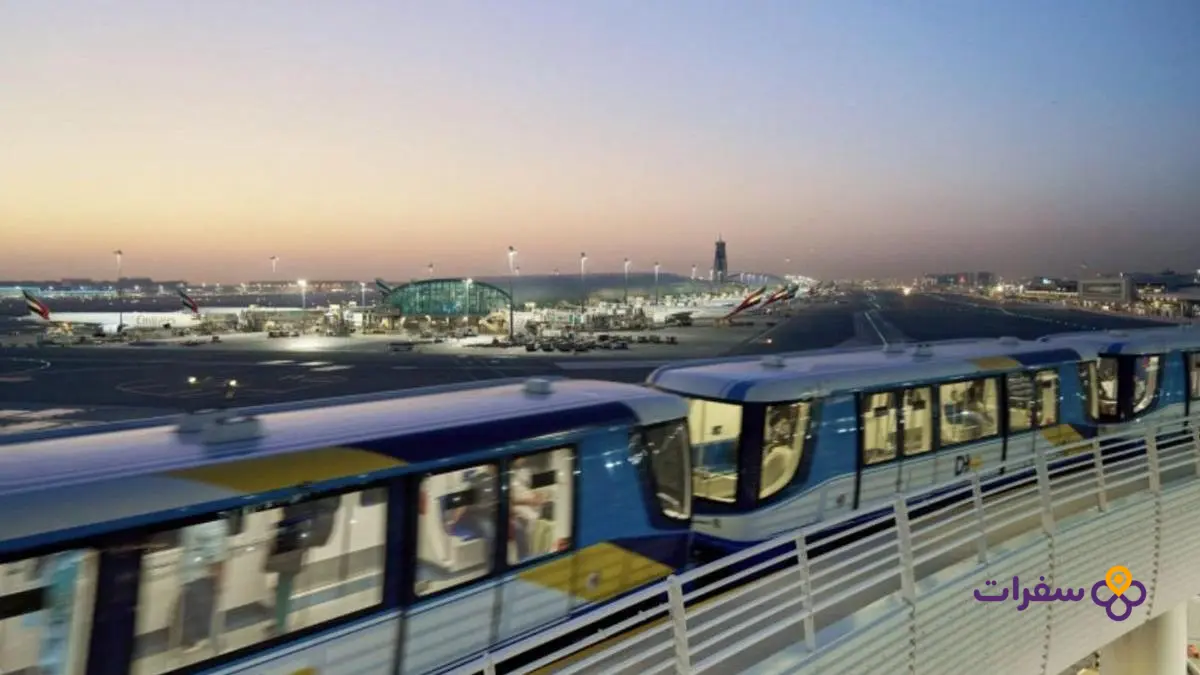
Dubai Metro and Connected Stations
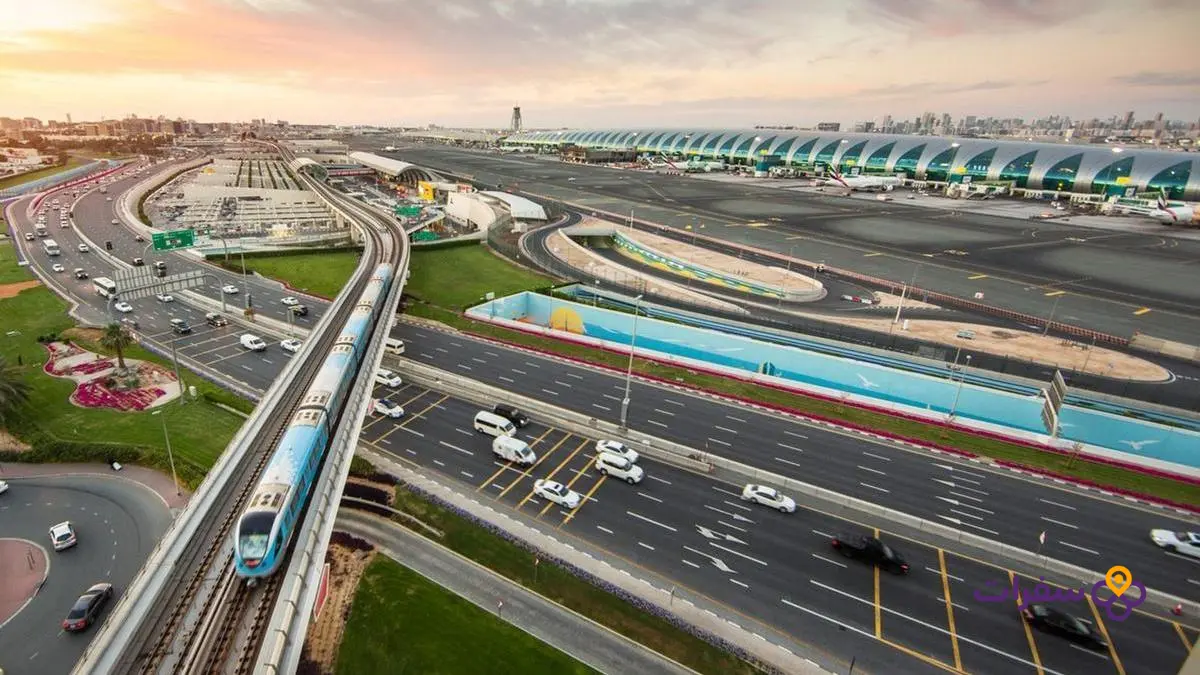
The Dubai Metro Red Line connects Terminal 1 and Terminal 3 directly to city-centre stations and the main residential areas, operating daily from the early morning hours until approximately midnight. The metro stations are located inside both terminals, making them easy to reach immediately after collecting baggage without the need for additional transfers. Terminal 2 is not connected to the metro, so travellers arriving through it need to use shuttle buses to reach Terminal 1 or 3 first. It is advisable to purchase a Nol smart card from the vending machines at the stations, as it is used for all public transport in the emirate.
Taxis and Public Buses
Official taxis are available around the clock in front of all passenger terminals, with organised queues and supervisors to manage the flow. These vehicles operate with approved meters and cover all areas of Dubai and the neighbouring emirates, and are considered the fastest option for direct travel to hotels or residential addresses. Public buses depart from dedicated stops outside the terminals and serve multiple routes to various neighbourhoods, but they take longer due to the multiple stops. For more details on schedules and routes, you can visit the official Dubai Airports website for the latest updates.
Car Rental and Private Transport
Car rental offices from international and local companies are located in the arrival halls of all terminals, with the option to book in advance online or rent directly upon arrival. Rental requires a valid international driving licence or a licence from specific recognised countries, in addition to a passport and a credit card for the deposit. Private transport and limousine services are also available through advance booking, offering greater comfort for families or large groups, but they are generally more expensive than other options.
Essential Services and Facilities Inside the Airport Halls
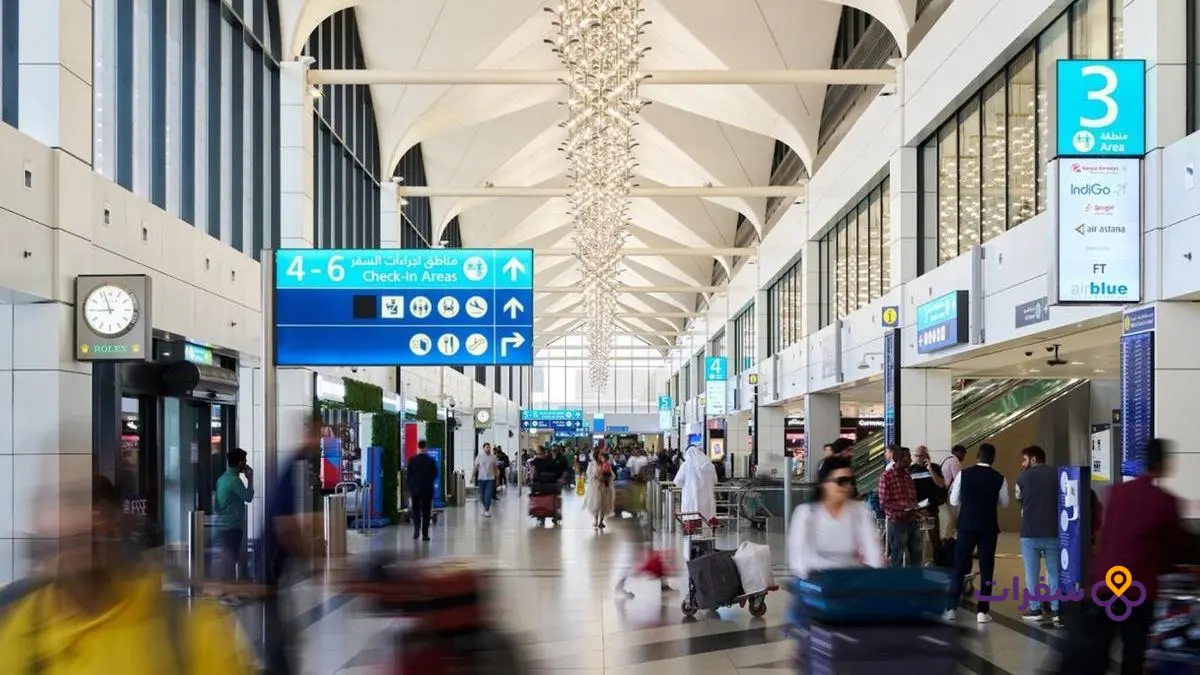
The following table outlines the main terminals and facilities available at Dubai International Airport:
| Terminal | Main Airlines | Metro | Buses | Additional Services |
|---|---|---|---|---|
| Terminal 1 | Most international airlines | Connected | Available | Internal train to Terminal 3 |
| Terminal 2 | Budget and regional airlines | Not connected | Shuttle buses | Smallest terminal |
| Terminal 3 | Emirates and flydubai | Connected | Available | Newest and largest, internal train to Terminal 1 |
Internet Connectivity and SIM Cards
Free Wi-Fi is available in all waiting halls and gates at Dubai Airport, and can be connected to directly without complicated registration. The network appears under a unified name and asks you to enter a phone number or email address to activate it for a limited period. Kiosks selling eSIMs and local SIM cards are spread throughout the arrivals area and near the baggage reclaim halls, offering instant data packages suitable for both short and long visits. Make sure to buy a SIM before leaving the airport if you need an immediate connection, as prices inside the airport are generally close to city prices with multiple options available.
VIP Lounges and Rest Areas
Some lounges allow the purchase of individual entry at the gate, while airline lounges remain restricted to passengers in higher classes or members of loyalty programmes. Check your boarding pass to see whether your ticket includes complimentary access, or ask at the airline desk before passing through passport control.
Special Assistance Services and Family Facilities
Special assistance for passengers with disabilities or elderly travellers can be requested at the time of booking or through customer service desks located in every terminal. Facilities include wheelchairs and escorts to ease movement between checkpoints and gates, and it is preferable to notify in advance to ensure the service is available upon arrival. Dedicated family rooms for mothers with infants are available near most main restrooms, and include changing tables and comfortable nursing seats away from the crowds.
Frequently Asked Questions About Travelling Through Dubai International Airport
Can I leave the airport during a long layover?
Yes, Iraqi travellers can leave the airport if the waiting period exceeds a few hours, provided they hold a valid UAE entry visa or qualify for visa-free entry. Make sure to collect your boarding pass for the next flight before leaving, and allow enough time to return and clear security again at least two hours before your departure.
What should I do if my flight is delayed and I miss my connecting flight?
Go immediately to the airline’s desk in the arrivals or transit hall to be rebooked on the next available flight. If both tickets were booked together as a single itinerary, the airline is responsible for finding an alternative at no extra charge in most cases. Keep your original boarding pass and any official delay notification as proof should you need it.
Is my baggage transferred automatically if I change terminals between two flights?
Bags are usually transferred automatically if both flights are booked on a single ticket or under a codeshare agreement between the two airlines. However, if the two tickets were booked separately or the two airlines do not have a cooperation agreement, you must collect your baggage on arrival and re-check it at the departure desk, which requires exiting the transit zone and passing through customs.
What is the procedure if my baggage is lost on arrival?
Go directly to the airline’s lost baggage desk in the baggage reclaim area before leaving the arrivals hall, and present your boarding pass along with the baggage tag attached to your ticket. An official report will be filed and you will be given a reference number to follow up on your case. Keep a copy of the report to use when claiming compensation or tracking the delivery of your bag later.