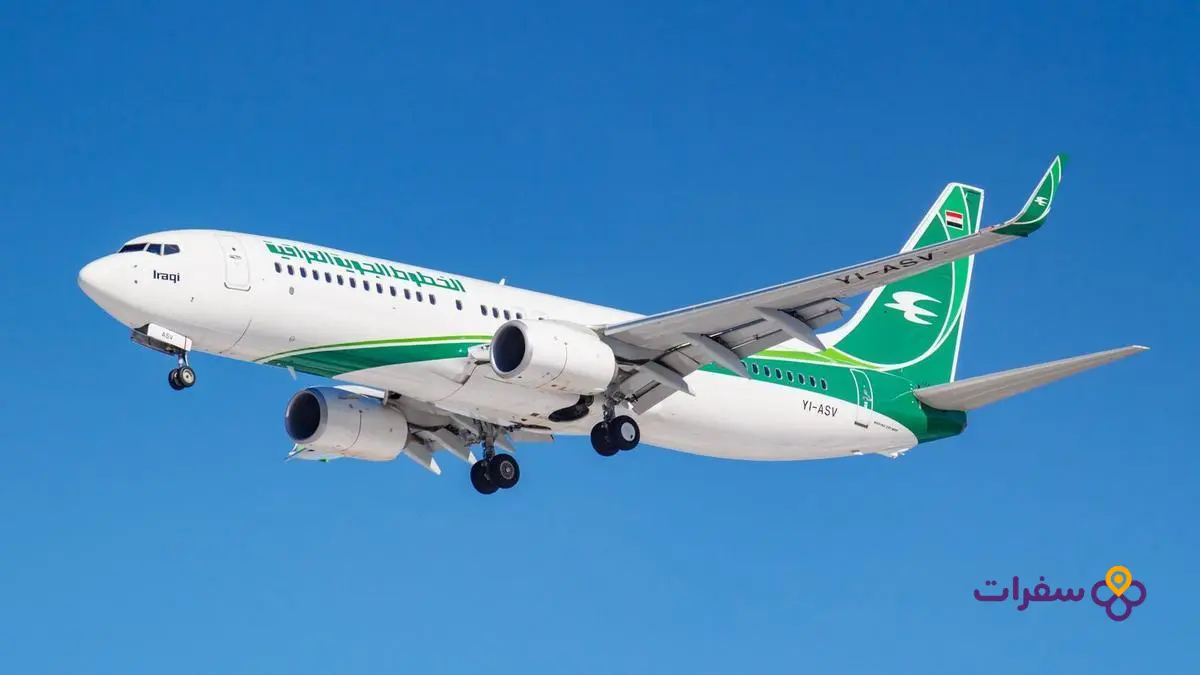
You stand in front of the scale at the airport and wonder: will your bag pass through without extra charges? Baggage allowance on Iraqi Airways and other airlines It varies depending on the carrier, the route, and the ticket type, and every extra kilogram means a cost that can be several times more than what you paid online in advance. This guide sets out the exact limits for each airline, the difference between the piece system and the kilogram system, and how to avoid surprises at the check-in counter at Baghdad, Erbil, and Basra airports.
A baggage weight guide for travellers departing from Iraqi airports
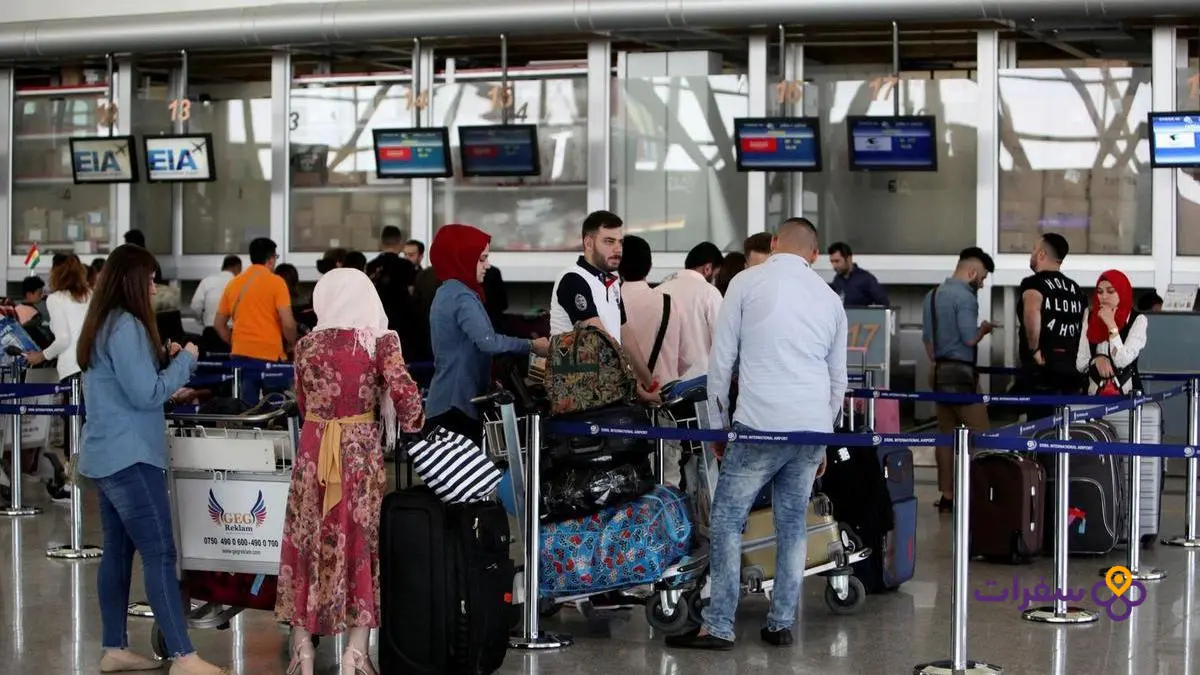
The baggage allowance for a passenger on a flight depends on three main factors: the route, the booked class, and the type of ticket purchased. Each ticket normally includes one checked bag to be carried in the aircraft hold, plus a carry-on bag for the cabin with specific standard dimensions. The policy on pooling weights among family members or calculating excess weight differs according to the system adopted by the carrier — whether the piece system or the kilogram system — and the mandatory weight limits are clearly stated on the e-ticket at the time of issuance.
The difference between checked baggage and cabin baggage
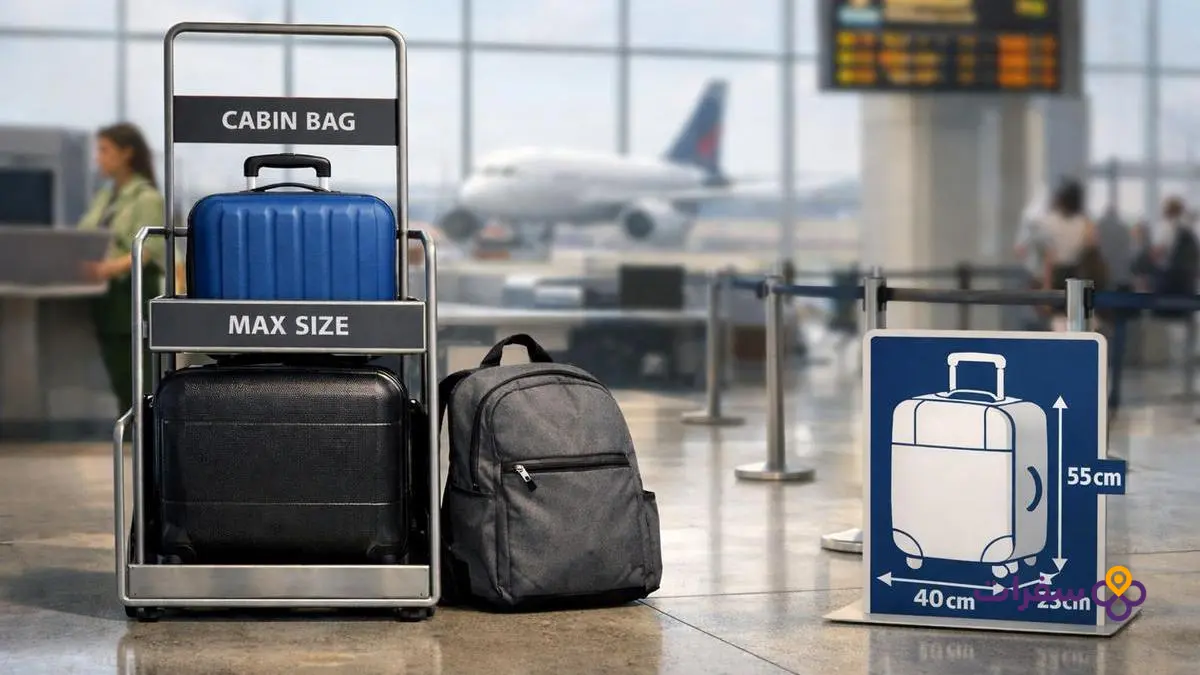
A checked bag is one that is handed in at the check-in counter and transported in the aircraft hold, while a carry-on bag stays with the passenger inside the cabin and is placed in the overhead bins or under the seat in front. Weight and dimension limits differ considerably between the two types: most airlines allow a checked bag of between 20 and 30 kilograms in economy class, while a carry-on bag is generally restricted to between 7 and 10 kilograms and dimensions not exceeding 55×40×23 centimetres in most cases. Check the baggage details printed on your booking confirmation before arriving at Baghdad, Erbil, or Basra airport to avoid surprises.
How the flight route determines weight limits
Baggage policy on Iraqi Airways differs according to the destination and duration of the flight. Short-haul flights such as Baghdad– Istanbul or Baghdad–Tehran flights may follow a single-piece system with a set weight, while longer flights or those heading to destinations such as Baghdad– Mashhad may allow a greater total weight or two checked pieces. Business class generally grants a higher limit than economy class, and may add an extra piece or 10 additional kilograms depending on the carrier’s policy.
Baggage policy on Iraqi Airways
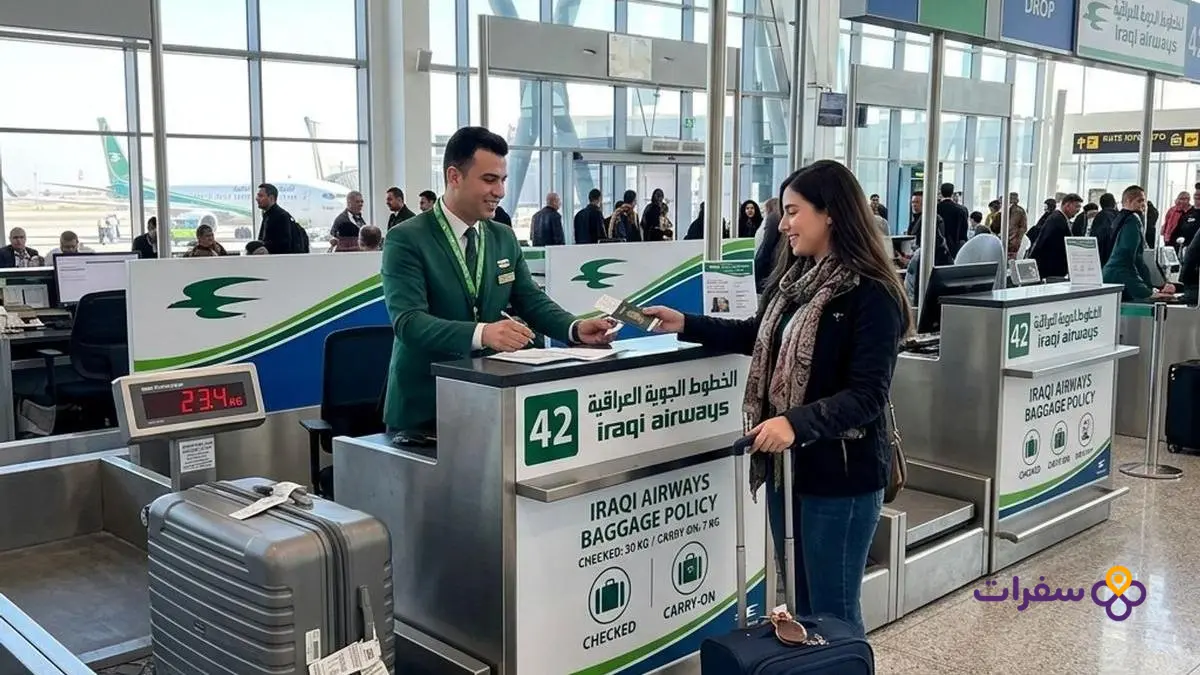
The baggage policy on Iraqi Airways sets weight and dimension limits based on the booked class and ticket type. An economy-class ticket normally includes one checked bag in the aircraft hold weighing between 20 and 30 kilograms depending on the route, while business class grants a higher limit of up to 40 kilograms or two separate pieces. The exact permitted limit can be verified by reviewing the e-ticket sent after completing a flight booking, as the details are clearly listed within the booking information.
Carry-on bag requirements and dimensions
The official Iraqi Airways website permits one carry-on bag in the cabin weighing no more than 7 kilograms. The bag must fit in the overhead bins or under the seat in front without obstructing other passengers.
Baggage for children and infants
A child occupying an independent seat receives the same baggage allowance as an adult in the booked class. An infant travelling on the accompanying passenger’s lap without a separate seat is generally permitted one checked bag weighing 10 kilograms, plus a foldable pushchair that is handed in at the aircraft gate or at the check-in counter depending on its size. Mobility aids for passengers with special needs are exempt from the total weight calculation and are transported free of charge, provided they are reported in advance at the time of booking.
Comparing baggage allowances across airlines operating in Iraq
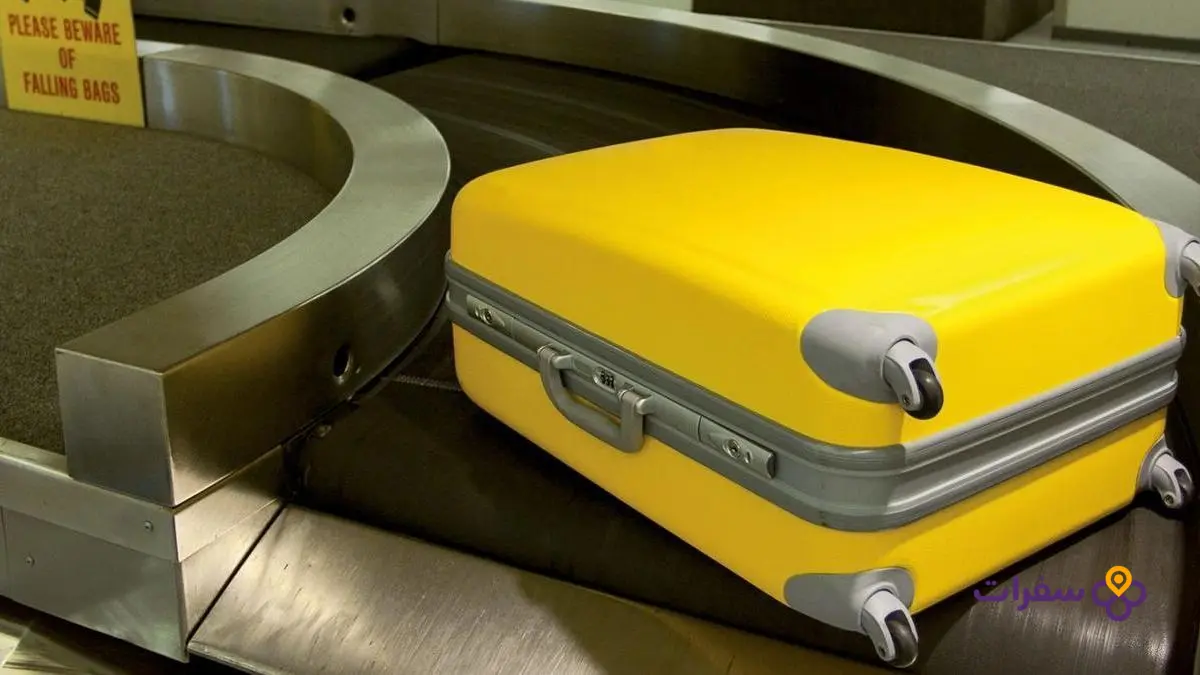
Baggage policy differs noticeably between the regional and international airlines operating flights from Iraqi airports. Some airlines use the piece system, which allows a set number of bags at a fixed weight per piece, while others apply the kilogram system, which counts the total weight without restricting the number of pieces. Carriers flying to Turkey and Iran generally follow more flexible policies on short-haul routes compared with long-haul international airlines.
Differences by ticket type
Basic economy tickets offer lower checked baggage limits compared with flexible or refundable tickets, even within the same economy class. Some discounted ticket types may exclude a checked bag entirely and cover only a carry-on bag, which makes it essential to read the ticket conditions carefully before arriving at the airport. Flexible tickets generally allow an extra piece or a higher weight, which is directly reflected in the overall ticket price.
Pooling weights among family members
Some airlines allow baggage weights to be pooled among passengers listed on the same booking, provided all bags are checked in together at the check-in counter. This policy is useful for families where one member’s bag is under the permitted limit, as the excess weight from another bag can be redistributed without paying additional fees. Not all carriers offer this option, and some require that pooling be within the same class and the same route, so it is advisable to confirm the conditions stated on the e-ticket or to enquire directly when the booking is made.
How excess weight charges are calculated and payment procedures
Airlines use two main systems to calculate excess weight: the piece system and the kilogram system. Under the piece system, a fixed fee is charged for each additional bag beyond the permitted number, regardless of its actual weight as long as it remains within the maximum limit per piece. The kilogram system, on the other hand, calculates the cost based on each kilogram exceeding the total permitted limit, and it is the more common system on regional flights such as Baghdad–Istanbul or Baghdad–Mashhad. Fees are collected directly at the check-in counter at the airport, and they are generally considerably higher than the additional weight charges paid in advance online before the departure date.
It is advisable to weigh bags at home before heading to the airport, leaving a safety margin of at least one kilogram to account for any differences between home and airport scales. Distributing items between checked bags and the carry-on bag helps avoid exceeding the permitted limit, especially when carrying heavy electronic devices or gifts.
Paying for extra weight in advance through the airline’s website or the booking agent saves a significant amount compared with paying at the airport. Most airlines accept electronic payment in dollars or in local currency, and a receipt is issued to be presented at the check-in counter to avoid any confusion or duplicate charges.
Prohibited and restricted items in baggage
Items prohibited in checked baggage
Civil aviation authorities prohibit placing any flammable or explosive materials inside checked bags that are transported in the aircraft hold; the list includes gas lighters, pressurised gas canisters, fireworks, pyrotechnics, and corrosive chemicals. Loose lithium batteries not installed in devices are also prohibited, while electronic devices containing internal batteries may be carried provided they are fully switched off and protected from impact. These restrictions apply to all flights, including Baghdad–Istanbul, Baghdad–Mashhad, and Baghdad–Tehran, without exception, and any violation may result in the entire bag being confiscated or the passenger being denied boarding.
Carry-on bag rules and liquids
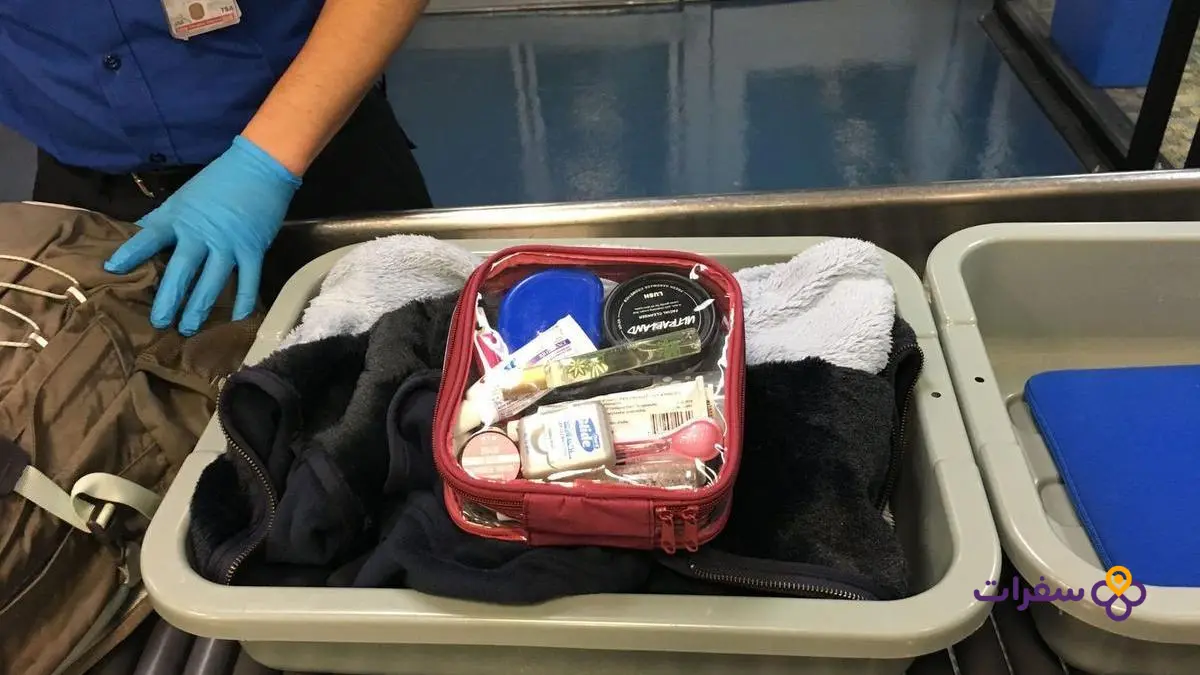
The internationally adopted liquids rule must be observed when packing a carry-on bag for the cabin: liquid containers are limited to no more than one hundred millilitres per container, and all containers must be placed inside a transparent resealable plastic bag with a capacity of one litre. This rule covers perfumes, creams, gels, toothpaste, and beverages, while essential medicines and infant formula are exempt, provided they are presented at the security checkpoint. Sharp objects such as scissors, knives, razor blades, and pointed metal tools are strictly prohibited in the cabin and are confiscated immediately upon discovery.
Batteries and portable electronic devices
Airlines require passengers to carry portable power banks in their carry-on bag only and not in checked baggage, with the condition that the capacity of each battery does not exceed a certain limit specified in milliampere-hours and printed on the battery itself. Damaged, swollen, or leaking electronic devices are prohibited from boarding the aircraft in any form, and it is advisable to cover the terminals of loose batteries with insulating tape to prevent accidental short circuits. These rules are strictly enforced at all Iraqi airports and are subject to thorough inspection before boarding.
| Airline | Economy class (checked bag) | Economy class (carry-on bag) | First class / Business class (checked bag) |
|---|---|---|---|
| Iraqi Airways | 20–30 kg (one piece) | 7 kg | 40 kg (or two pieces) |
| Other examples (average) | 20–23 kg (one piece) | 7–10 kg | 30–40 kg (one or two pieces) |
Frequently asked questions about baggage allowances for Iraqi travellers
Can excess weight be transferred from checked baggage to carry-on luggage to avoid fees?
This is not permitted at the airport check-in counter, because the check-in agent will also weigh your carry-on bag if it appears heavy or exceeds the approved dimensions. Attempting this leads to delays in the check-in process and may force you to reorganize your luggage in front of other passengers, so arrange your bags at home according to the limits printed on your ticket from the outset.
What happens if my checked bag is lighter than the permitted weight allowance?
You do not receive any financial compensation or bonus points in exchange for unused weight. The allowance is a ceiling, not an entitlement, and airlines do not pay passengers for failing to use their full quota, so make full use of the available weight if you need to without any concern.
Do gifts and purchases that I carry by hand count toward my cabin bag allowance?
Yes, any shopping bag or additional carrier is considered part of the single permitted carry-on allowance. Some airlines are lenient about a small second item such as a laptop bag or a handbag, but the official rule is limited to one piece only in the cabin, within the specified dimensions.
How can I confirm the baggage allowance details before arriving at the airport?
Open the e-ticket sent to your email immediately after booking, and you will find a line headed “Baggage Allowance” that specifies the number of pieces or kilograms permitted for each leg of the journey. If the trip involves more than one carrier, check each airline’s policy separately, as the limits may differ between legs.